
PEDRO ALBIZU CAMPOS
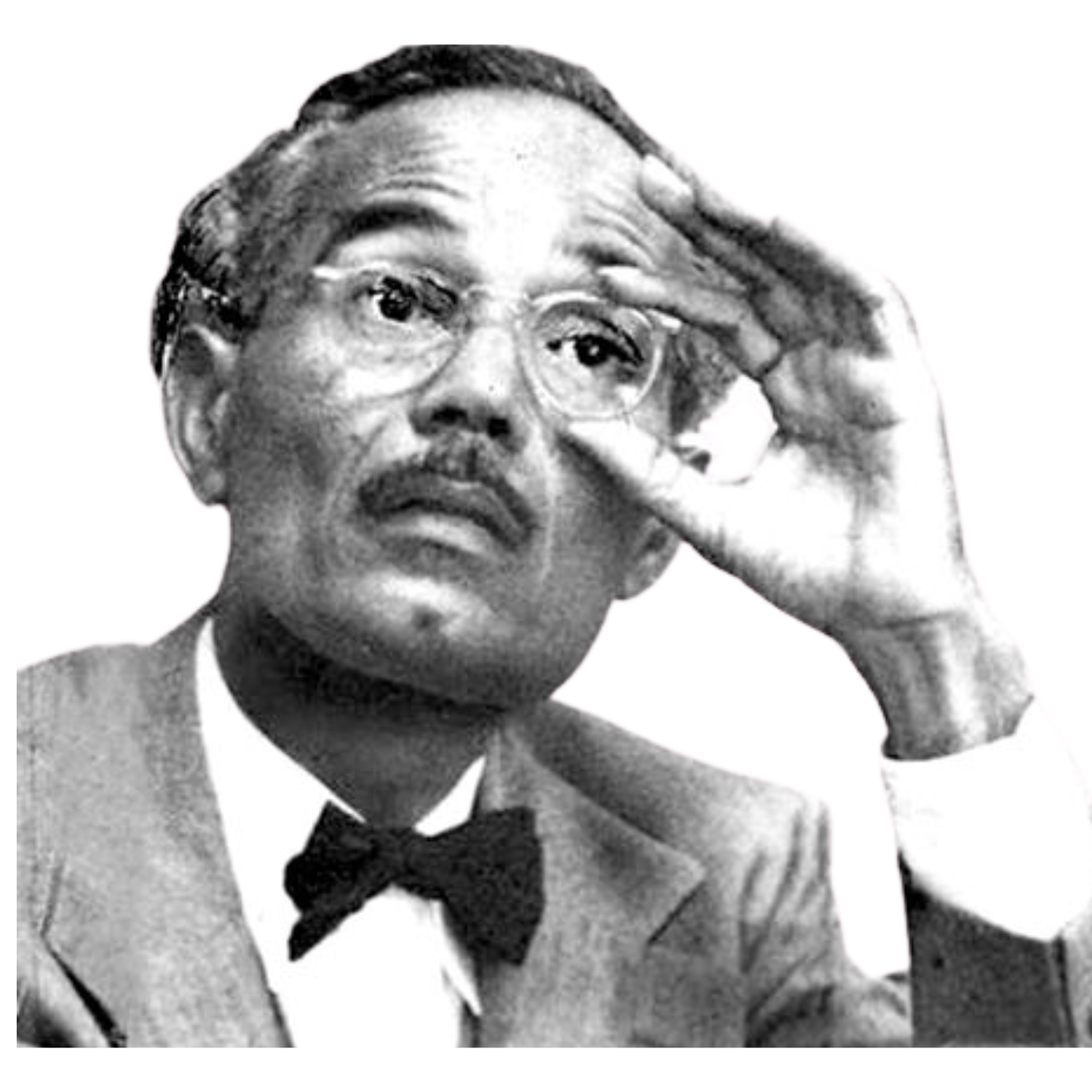
“Independence will be achieved by the intensity of those who devote themselves totally to the Nationalist ideal.””
El Maestro — Puerto Rico's Prophet of Sovereignty
BORN: September 12, 1891 · Ponce, Puerto Rico || DIED: April 21, 1965 · San Juan, Puerto Rico (following stroke and prolonged imprisonment) || ROLE: President, Nationalist Party of Puerto Rico (1930–1965)
WHO THEY WERE
Pedro Albizu Campos was born in Tenerías, a poor barrio in Ponce, Puerto Rico, the son of Juliana Campos, a domestic worker of Taíno, Spanish, and African descent, whose own parents had been enslaved, and a Basque merchant father who refused to recognize him until Pedro was already at Harvard University. He came up from poverty with nothing but brilliance and determination. He was not enrolled in school until age eleven, yet finished elementary school in four years and high school in two.4
In 1912, he won a scholarship to study engineering at the University of Vermont, then transferred to Harvard University, becoming the first Puerto Rican to graduate from Harvard College. He earned the highest grade point average in his Harvard Law School class, an achievement that entitled him to deliver the valedictory speech at graduation. His professors delayed two of his final exams specifically to prevent him from graduating on time; the animus was directed at his African heritage. Harvard offered him no protection. The United States government offered him something else entirely: high-ranking legal and diplomatic posts, and he turned them down.1
He was fluent in eight languages. He had met Subhas Chandra Bose and Rabindranath Tagore at Harvard. He helped draft the constitution of the Irish Free State alongside Éamon de Valera.3 He could have had any career in the world. Instead, in 1921, he returned to Ponce and spent the rest of his life, which would include twenty-six years in prison, in service to Puerto Rican independence. He saw that service not as martyrdom but as a legal and moral obligation. He argued, consistently and precisely, that the U.S. occupation of Puerto Rico was illegal under international law: Spain had already granted Puerto Rico full autonomy in 1897, and no treaty could erase a sovereign people's right to self-determination.6
He became president of the Puerto Rican Nationalist Party in 1930 and immediately launched a mass education campaign for self-determination. Puerto Ricans called him 3“El Maestro”, The Teacher. He was the first great theoretician of Puerto Rican anticolonial thought, and the first to name the structural contradictions that colonial rule produces in the colonized psyche.6
WHAT THEY BUILT OR FOUGHT FOR
Albizu Campos understood that colonialism was an economic project as much as a political one. When he returned to Puerto Rico in the early 1930s, U.S. sugar corporations dominated the island's economy, operating through monopoly control of utilities and agriculture, and extracting wealth while Puerto Rican workers lived in poverty. In 1933, he led a strike against the Puerto Rico Railway and Light and Power Company. In 1934, he represented thousands of sugar cane workers as their attorney against the U.S. sugar industry, winning a dramatic wage increase, from 45 cents to $1.75 per twelve-hour day.12 That action made him a marked man in the eyes of U.S. corporate and government interests.
His political doctrine, known as 6retraimiento, or non-collaboration, called on Puerto Ricans to boycott colonial elections and refuse military service to the United States. He argued that participation in elections administered by a colonial power was a form of legitimation, not democracy. He organized the Cadets of the Republic, a Nationalist youth movement, as a visible symbol of Puerto Rican national sovereignty.14
He traveled throughout Latin America, the Dominican Republic, Haiti, Cuba, Mexico, Panama, Peru, Venezuela, building solidarity for the independence cause and framing Puerto Rico's struggle within a broader pan-American anti-imperial framework.3 He was not simply fighting for a small island. He was articulating the right of all colonized peoples to self-determination, and he did so three decades before that language became official United Nations doctrine.
In 1932, he obtained and publicized a letter written by Dr. Cornelius P. Rhoads, a Rockefeller Institute pathologist conducting medical research in Puerto Rico, in which Rhoads described Puerto Ricans as a 'degenerate race' that should be exterminated, and boasted of intentionally killing eight patients while injecting others with cancer cells.4 Albizu Campos sent copies of the letter to authorities and the press, calling it an extermination plot. An investigation at the time cleared Rhoads. The case was reopened in 2003, and the American Association for Cancer Research removed Rhoads's name from its annual prize. The questions Albizu raised were never fully answered.
"The Homeland is valor and sacrifice." — Pedro Albizu Campos — Nationalist Party slogan, early 1930s
WHO CAME FOR THEM — AND HOW
The U.S. government's campaign against Pedro Albizu Campos was systematic, sustained, and encompassed almost every instrument of state power: criminal prosecution, surveillance, censorship, paramilitary violence, imprisonment, and ultimately what mounting evidence suggests was deliberate physical destruction. It lasted thirty years.
THE RIGGED TRIAL OF 1936
In 1936, following the assassination of Puerto Rican police chief Colonel E. Francis Riggs by two Nationalists, who were subsequently executed without trial at police headquarters11, a federal grand jury indicted Albizu Campos and other Nationalist leaders on charges of seditious conspiracy. The first trial ended in a hung jury, split along racial lines: all seven Puerto Rican jurors voted to acquit; all five American jurors voted to convict. The judge ordered a retrial and ensured the new jury consisted of ten Americans and only two Puerto Ricans. The second jury convicted him. U.S. Congressman Vito Marcantonio publicly denounced the proceedings as 'a frame-up' and 'one of the blackest pages in the history of American jurisprudence,' charging that the jury had been hand-picked by the prosecuting attorney.11 Albizu Campos was sentenced to ten years in the federal penitentiary in Atlanta.
THE PONCE MASSACRE — MARCH 21, 1937
On Palm Sunday, while Albizu Campos sat in an Atlanta prison, his supporters organized a peaceful march in his hometown of Ponce. Men, women, and children arrived dressed in their best clothes, waving palm fronds and accompanied by a five-piece band playing the Puerto Rican national anthem. At the last moment, authorities revoked the march permit. The marchers proceeded anyway, and police surrounded them and opened fire with rifles and Thompson submachine guns.12
Twenty-one people were killed and more than two hundred wounded, many shot in the back as they tried to flee.18 U.S. authorities claimed the police had acted in self-defense. The corpses were rearranged before press photographs were taken. An independent investigation by the American Civil Liberties Union concluded that the police had committed an illegal massacre. Author Nelson Denis, writing decades later, described how authorities choreographed the setting and 'created a different reality' for the mainland press.18 The Ponce Massacre remains the bloodiest act of colonial repression in modern Puerto Rican history.
THE GAG LAW AND THE CARPETAS
When Albizu Campos was released from prison in December 1947, the response was immediate. Within months, in June 1948, Puerto Rico's U.S.-backed governor signed Public Law 53, known as 24La Ley de la Mordaza (The Gag Law). The law was nearly a word-for-word translation of the federal Smith Act. It eliminated First Amendment protections in Puerto Rico. It became illegal to display the Puerto Rican flag, sing a patriotic song, whistle a patriotic tune, own a portrait of Albizu Campos, or speak in favor of independence, punishable by ten years in federal prison.27 The law was, as author Nelson Denis documented, functionally designed to silence one man while stripping two million Puerto Ricans of their constitutionally promised rights.27
Simultaneously, the FBI maintained a secret surveillance program, the 24carpetas, that over six decades compiled files on more than 100,000 Puerto Ricans.27 Albizu Campos's own FBI file ran to over 20,000 pages. FBI agents tapped his phone, intercepted his mail, filmed his public speeches, and interrogated anyone who visited, spoke to, or corresponded with him.24 During the four years he was out of prison between 1947 and 1950, he was surveilled around the clock by a rotating team of six FBI agents, twenty-five agents total required to maintain the rotation.27
THE 1950 REVOLT AND A SECOND IMPRISONMENT
In October 1950, having discovered what Nationalist Party intelligence believed was a secret U.S. plan to destroy the independence movement entirely17, and pushed beyond endurance by the Gag Law, ongoing repression, and the U.S. government's impending move to formalize Puerto Rico's colonial status as a 'Commonwealth', Albizu Campos called for armed revolt. Nationalists rose up in eight towns across the island. The Republic of Puerto Rico was declared in the town of Jayuya. An attempt was made on the life of President Truman at Blair House in Washington, D.C. The U.S. government responded by bombing two towns, mobilizing 5,000 National Guardsmen, and arresting over 3,000 people. Albizu Campos was arrested at his home following a two-hour firefight and sentenced to eighty years in prison.24
RADIATION — THE FINAL DESTRUCTION
Inside La Princesa prison in San Juan, Albizu Campos began deteriorating in ways that could not be explained by age or standard prison conditions. His skin blistered and cracked. He developed severe burns and welts across his body. He reported seeing colored rays directed at him and covered himself with wet towels to shield against the radiation, and was publicly ridiculed by guards as 20El Rey de las Toallas (The King of the Towels).20
His claims were dismissed as evidence of psychosis. But other prisoners in the same facility, Francisco Matos Paoli, Roberto Díaz, and Juan Jaca, independently reported feeling the same effects.20 Dr. Orlando Daumy, a radiologist and president of the Cuban Cancer Association, traveled to Puerto Rico to examine Albizu Campos and concluded that his symptoms were consistent with intensive doses of radiation.23 The FBI actively surveilled and investigated any physician who attempted to examine or treat him, including sending memos to J. Edgar Hoover requesting background checks on doctors who planned to visit.20
In 1994, the U.S. Department of Energy confirmed that radiation experiments had been conducted on prisoners without their consent during the period of Albizu Campos's imprisonment.35 A growing body of evidence, documented at length by Nelson Denis in 24War Against All Puerto Ricans (2015), indicates that for years inside La Princesa, Albizu Campos was subjected to what Denis describes as Total Body Irradiation, which caused the cerebral thrombosis he suffered in 1957 and the physical destruction that followed. 24
In 1956, he suffered a stroke in prison. On November 15, 1964, on the brink of death, Governor Luis Muñoz Marín pardoned him. Pedro Albizu Campos died on April 21, 1965. More than 75,000 Puerto Ricans joined his funeral procession to the Old San Juan Cemetery.26
"If they won't listen to legal reason, then we must take up arms against the invaders." — Pedro Albizu Campos
WHAT THEY LEFT BEHIND
Pedro Albizu Campos spent twenty-six of his last twenty-nine years in prison. He left behind no political party in power, no sovereign republic, no formal institutional structure. What he left behind was a framework, the most rigorous and complete anticolonial theory Puerto Rico had ever produced, and a cultural legacy that the U.S. government spent decades trying to erase and could not.
Social scientist Juan Manuel Carrión wrote that 'Albizu still represents a forceful challenge to the very fabric of [Puerto Rico's] colonial political order.'31 Lolita Lebrón, the Nationalist who led the 1954 attack on the U.S. House of Representatives, called him 'Puerto Rico's most visionary leader.'31
His image, on murals, T-shirts, flags, and tattoos, appears in every major protest in Puerto Rico to this day.33 Parks, schools, streets, and cultural centers across the island bear his name. The Caribbean Anti-Colonial Thought Archive at Trinity College preserves and teaches his writings. Andre Lee Muñiz's 2022 biography, 29Vida y Hacienda: The Life and Legacy of Dr. Pedro Albizu Campos, brought his full story to English-language readers for the first time.37
The independence movement he led remains the most significant challenge to U.S. sovereignty claims over Puerto Rico. Though independence polling has historically been a minority position on the island, Albizu's deeper contribution, the documentation of Puerto Rico's colonial condition as a structural political and economic fact, not merely a cultural grievance, has shaped every significant political debate Puerto Rico has had since his death.7
"The good people of the United States are not to be blamed for the shameless conduct of certain government officials." — Pedro Albizu Campos
WHY IT STILL MATTERS
Puerto Rico in 2026 is still a colony. The island is still classified as an 'unincorporated territory', a legal designation with no clear precedent in international law and no clear exit, in which Puerto Ricans hold U.S. citizenship but have no vote for president, no voting representation in Congress, and no final authority over their own governance.41
In 2016, when Puerto Rico's debt reached over $70 billion, and the territory was unable to file for standard Chapter 9 municipal bankruptcy because of its ambiguous legal status38, the United States Congress passed PROMESA, creating an unelected Fiscal Oversight Board with near-total control over Puerto Rico's budget. Puerto Ricans on the island had no vote on the composition of that board. Elected officials' decisions could be overridden by it. The Harvard Political Review called PROMESA's fiscal board 'a real threat to the self-governance of Boricuas.'40
Scholars and independence advocates have noted that PROMESA confirms precisely what Albizu Campos argued for decades: that Puerto Rico's Commonwealth status, established in 1952 while Albizu Campos sat in prison under an eighty-year sentence, was never sovereignty; it was a rebranding of colonialism.45 The Organization of American Historians observed plainly: 'It is now obvious that Puerto Rico did not become sovereign or cease to be a colony in 1952.'45
Hurricane Maria in 2017 then demonstrated in catastrophic terms what colonial dependency costs: slow federal response, inadequate infrastructure, and a death toll the federal government drastically undercounted, all flowing directly from a political relationship that denies Puerto Ricans the self-governing authority to prepare and respond as a sovereign people.
Albizu Campos warned that the United States wanted the cage without the bird 42, that the goal was Puerto Rico's land, resources, and strategic location, emptied of the people who would resist being owned. Puerto Rico has lost roughly half its population over a century of colonial economic policy. The independence movement today frames this in terms of democratic legitimacy and economic self-determination. 46
P.O.C.C. names Pedro Albizu Campos because the systems he named, the extraction, the suppression, and the legal manipulation of colonial status, are still operating. Understanding what was done to him is inseparable from understanding what continues to be done to Puerto Rico.
KEY QUOTES
"Independence will be achieved by the intensity of those who devote themselves totally to the Nationalist ideal." — Pedro Albizu Campos
"The Homeland is valor and sacrifice." — Pedro Albizu Campos — Nationalist Party motto
"If they won't listen to legal reason, then we must take up arms against the invaders." — Pedro Albizu Campos
"The good people of the United States are not to be blamed for the shameless conduct of certain government officials." — Pedro Albizu Campos
SOURCES & CITATIONS
1 Wikipedia Contributors. "Pedro Albizu Campos." Wikipedia, The Free Encyclopedia. Last updated 2025. https://en.wikipedia.org/wiki/Pedro_Albizu_Campos
2 Caribbean Anti-Colonial Thought Archive Project. "Pedro Albizu Campos." Trinity College. https://caribbeananti-colonialthoughtarchive.domains.trincoll.edu/pedro-albizu-campos/
3 Encyclopaedia Britannica. "Pedro Albizu Campos." Britannica.com. https://www.britannica.com/biography/Pedro-Albizu-Campos
4 EBSCO Research Starters. "Pedro Albizu Campos." Biography. https://www.ebsco.com/research-starters/biography/pedro-albizu-campos
5 ReadWriteThink / IRA. "Pedro Albizu Campos Leads the Puerto Rican Independence Movement." https://www.readwritethink.org/classroom-resources/calendar-activities/pedro-albizu-campos-leads
6 Adult Learning Unleashed (ALU-C). "Pedro Albizu Campos." http://www.alu-c.com/pedro-albizu-campos
7 Godreau, Isar P. "Puerto Rico's Albizu Campos Centenary." Against the Current, No. 35. November/December 1991. https://againstthecurrent.org/atc035/campos-centennial/
8 Britannica Kids. "Pedro Albizu Campos." https://kids.britannica.com/students/article/Pedro-Albizu-Campos/633841
9 Centro Library and Archives, Hunter College CUNY. "Albizu Campos, Pedro, 1891–1965." ArchivesSpace. https://centroarchives.hunter.cuny.edu/agents/people/497
10 Libcom.org. "The Ponce Massacre, 1937." https://libcom.org/article/ponce-massacre-1937
11 Wikipedia Contributors. "Pedro Albizu Campos — Legal trials, Ponce Massacre." https://en.wikipedia.org/wiki/Pedro_Albizu_Campos
12 Libcom.org. "The Ponce Massacre, 1937." https://libcom.org/article/ponce-massacre-1937
13 EBSCO Research Starters. "Pedro Albizu Campos — Ponce Massacre section." https://www.ebsco.com/research-starters/biography/pedro-albizu-campos
14 Grokipedia. "Pedro Albizu Campos." https://grokipedia.com/page/Pedro_Albizu_Campos
15 FBI Vault. "Pedro Albizu Campos — Declassified Files." U.S. Federal Bureau of Investigation. https://vault.fbi.gov/pedro-albizu-campos
16 Denis, Nelson. War Against All Puerto Ricans — Pedro Albizu Campos. https://waragainstallpuertoricans.com/pedro-albizu-campos/
17 Rovira, Carlos. "Salute to the Life of El Maestro: Dr. Pedro Albizu Campos." https://carlitoboricua.blog/2020/09/05/salute-to-dr-pedro-albizu-campos-on-the-date-of-his-birth/
18 Democracy Now! "War Against All Puerto Ricans: Inside the U.S. Crackdown on Pedro Albizu Campos & Nationalist Party." April 21, 2015. https://www.democracynow.org/2015/4/21/war_against_all_puerto_ricans_inside
19 Oberlin College Library. "Pedro Albizu Campos — Puerto Rican Independence Activists." Omeka Projects. http://www.oberlinlibstaff.com/omeka_projects/exhibits/show/puerto-rican-independence/pedro-albizu-campos
20 Wikipedia Contributors. "Pedro Albizu Campos — Imprisonment and radiation section." https://en.wikipedia.org/wiki/Pedro_Albizu_Campos
21 Piedrahita, Sandro F. "The Destruction of Pedro Albizu Campos." The Write Launch. Issue 88, October 2024. https://thewritelaunch.com/2024/10/the-destruction-of-pedro-albizu-campos/
22 Kiddle Encyclopedia. "Pedro Albizu Campos Facts for Kids." https://kids.kiddle.co/Pedro_Albizu_Campos
23 Latinopia. "Biography — Pedro Albizu Campos." http://latinopia.com/latino-history/biography-pedro-albizu-campos/
24 Denis, Nelson. War Against All Puerto Ricans: Revolution and Terror in America's Colony. Nation Books, 2015. Extended interview: Truthout. https://truthout.org/articles/how-the-united-states-economically-and-politically-strangled-puerto-rico/ and Portside. https://portside.org/2015-05-28/how-united-states-economically-and-politically-strangled-puerto-rico
25 Adult Learning Unleashed. "Pedro Albizu Campos — retraimiento, radiation, and legacy." http://www.alu-c.com/pedro-albizu-campos
26 Kiddle Encyclopedia. "Pedro Albizu Campos — death and funeral." https://kids.kiddle.co/Pedro_Albizu_Campos
27 Denis, Nelson (interview). Truthout. "How the United States Economically and Politically Strangled Puerto Rico." May 24, 2015. https://truthout.org/articles/how-the-united-states-economically-and-politically-strangled-puerto-rico/
28 LA Progressive. "Why Puerto Rico Is Stuck in Limbo." July 29, 2024. https://www.laprogressive.com/foreign-policy/puerto-rico-is-stuck-in-limbo
29 Caribbean Anti-Colonial Thought Archive. "Pedro Albizu Campos — political writings." https://caribbeananti-colonialthoughtarchive.domains.trincoll.edu/pedro-albizu-campos/
30 EBSCO Research Starters. "Pedro Albizu Campos — legacy section." https://www.ebsco.com/research-starters/biography/pedro-albizu-campos
31 Wikipedia Contributors. "Pedro Albizu Campos — Legacy section." https://en.wikipedia.org/wiki/Pedro_Albizu_Campos
32 ReadWriteThink. "Pedro Albizu Campos — accomplishments." https://www.readwritethink.org/classroom-resources/calendar-activities/pedro-albizu-campos-leads
33 Adult Learning Unleashed. "Pedro Albizu Campos — contemporary legacy." http://www.alu-c.com/pedro-albizu-campos
34 Encyclopaedia Britannica. "Pedro Albizu Campos — prison release and Commonwealth opposition." https://www.britannica.com/biography/Pedro-Albizu-Campos
35 Britannica Kids. "Pedro Albizu Campos — Department of Energy confirmation of radiation experiments." https://kids.britannica.com/students/article/Pedro-Albizu-Campos/633841 [citing U.S. Department of Energy confirmation, 1994]
36 Against the Current / Marxists.org. "Puerto Rico's Albizu Campos Centenary." https://againstthecurrent.org/atc035/campos-centennial/
37 Ramirez de Arellano, Susanne. "New Albizu Campos Biography in English Arrives at Right Time." Latino Rebels. October 6, 2022. https://www.latinorebels.com/2022/10/06/donpedrobio/
38 EBSCO Research Starters. "Puerto Rico's Debt Crisis: Overview." https://www.ebsco.com/research-starters/politics-and-government/puerto-ricos-debt-crisis-overview
39 LA Progressive. "Why Puerto Rico Is Stuck in Limbo." https://www.laprogressive.com/foreign-policy/puerto-rico-is-stuck-in-limbo
40 Harvard Political Review. "An Unfulfilled Promise: Colonialism, Austerity, and the Puerto Rican Debt Crisis." June 14, 2022. https://harvardpolitics.com/unfulfilled-promise-2/
41 Wikipedia Contributors. "Puerto Rican Government-Debt Crisis." https://en.wikipedia.org/wiki/Puerto_Rican_government-debt_crisis
42 Global Research / Puerto Rico Tribunal Ad Hoc Committee. "Colonization and Destruction: People's Tribunal on U.S. Crimes Against Puerto Rico." https://www.globalresearch.ca/peoples-tribunal-on-u-s-crimes-against-puerto-rico/5653828
43 Puerto Rico Syllabus. "Explosion of the Debt Crisis." https://puertoricosyllabus.com/syllabus/explosion-of-the-debt-crisis/
44 Boston University Guided History. "Puerto Rico: A Study of the World's Largest Stateless Nation." https://blogs.bu.edu/guidedhistory/historians-craft/puerto-rico-a-study-of-the-worlds-largest-stateless-nation/
45 Organization of American Historians (OAH). "Puerto Rico's Many Crises: A Neocolonial Tale." August 17, 2016. https://www.oah.org/process/puerto-rico-crises/
46 LA Progressive. "Puerto Rico Independence Movement." March 1, 2026. https://www.laprogressive.com/democracy/puerto-rico-independence-movement