
João Goulart
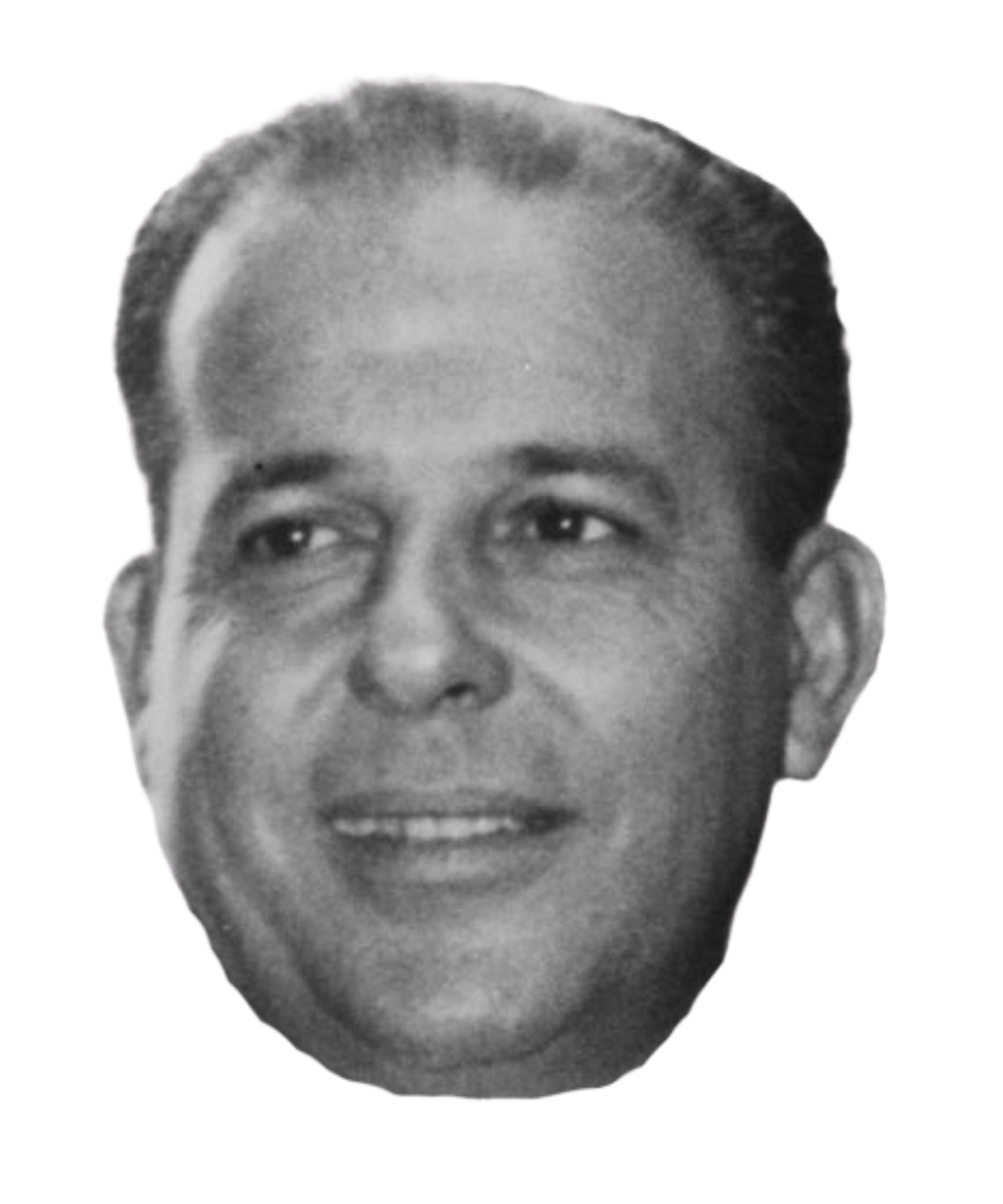
“Brazil isn’t Cuba, but if it ever became another Cuba, it would be a more dangerous one.”
Known as Jango — The President America Erased
Born: March 1, 1919 — São Borja, Rio Grande do Sul, Brazil || Died: December 6, 1976 — Mercedes, Corrientes, Argentina (disputed) || Role / Title: 24th President of Brazil (1961–1964) || Country: Brazil
WHO HE WAS
João Belchior Marques Goulart, universally known as Jango, was born into a wealthy ranching family in the southern Brazilian state of Rio Grande do Sul. He came of age in the orbit of Getúlio Vargas, Brazil’s towering populist patriarch, whose political machine gave Goulart both his first platform and his deepest convictions about labor and national sovereignty.
He was not a communist, regardless of what Washington insisted. He was a nationalist reformist, a man who believed that Brazilian land, Brazilian oil, and Brazilian wages belonged first to the Brazilian people. He built his political career through the Brazilian Labour Party (PTB), rising from state legislator to Minister of Labour to Vice President to the presidency itself, taking power in 1961 after the abrupt resignation of President Jânio Quadros.
His assumption of the presidency was itself nearly stopped by a military coup. Conservatives within Brazil’s armed forces tried to block his inauguration outright, and the compromise that allowed him to take office included a parliamentary system that stripped him of executive power. He spent his first two years governing with one hand tied behind his back before a 1963 national plebiscite restored full presidential authority to him by a ratio of five to one.
WHAT HE BUILT AND FOUGHT FOR
Goulart’s governing agenda, the Reformas Básicas, or Basic Reforms, was announced formally in early 1964. It represented the most ambitious attempt at structural equity Brazil had ever seen from an elected head of state.
Land Reform.
Brazil’s land ownership was catastrophically concentrated. Goulart’s agrarian reform bill proposed redistributing large, unproductive estates to landless peasants. The Peasant Leagues of the northeast, organizing millions of rural poor demanding land “by law or by force”, gave his proposal moral urgency.
Nationalization of Resources.
He moved to nationalize petroleum refineries and cap the export of profits by foreign corporations, ensuring that Brazil’s wealth circulated within Brazil rather than flowing to multinational coffers.
Labor and Wage Protections. As former Minister of Labour, Goulart had deep roots in the union movement. He championed wages, workers’ rights, and the political enfranchisement of enlisted military personnel, the latter of which would become the final provocation his officers used to justify the coup.
Voting Rights and Electoral Reform. Goulart pushed to extend suffrage to Brazil’s illiterate population, roughly half the country, who were excluded from the vote. This alone made him an existential threat to the conservative political establishment.
Independent Foreign Policy. Goulart refused to treat Washington as Brazil’s supervisor. He maintained diplomatic and trade relations with Cuba and the Soviet bloc, opposed the U.S.-backed exclusion of Cuba from the OAS, and insisted on Brazil’s right to self-determination. This sovereignty position was, to the Kennedy and Johnson administrations, the original sin.
WHO CAME FOR HIM, AND HOW
THE UNITED STATES: A DOCUMENTED CAMPAIGN
The U.S. government’s campaign against Goulart was multi-layered, long-running, and deliberately covert. It began during the Kennedy administration and accelerated under Lyndon Johnson. The methods ranged from economic destabilization to electoral interference to military pre-positioning. [1]
ELECTORAL INTERFERENCE (1962)
The United States directly funded pro-U.S. candidates in Brazil’s 1962 parliamentary elections. According to researcher James Green of Brown University, the amount spent by Washington in those elections exceeded what the United States spent on Kennedy’s own presidential campaign the previous year. The explicit goal was to elect legislators who would block Goulart’s reform agenda from the inside. [2]
ECONOMIC STRANGULATION
Washington redirected U.S. economic assistance away from Goulart’s federal government and toward state governors who were aligned with or amenable to removing him. The World Bank and IMF suspended lending to Brazil during his presidency. After the coup, that money returned immediately and multiplied. IMF and World Bank loans, frozen for three years under Goulart, resumed within months of the military takeover and averaged tens of millions of dollars annually through the late 1960s, reaching nearly half a billion per year by the mid-1970s. [3]
OPERATION BROTHER SAM
The most direct evidence of U.S. military involvement in the coup is Operation Brother Sam. Planned in coordination between U.S. Ambassador Lincoln Gordon and officials in both the Kennedy and Johnson administrations, the operation involved assembling a naval task force, including an aircraft carrier, destroyers, and fuel tankers, off the Brazilian coast to provide logistical and military support to the coup plotters if needed. [4]
On March 27, 1964, four days before the coup, Ambassador Gordon sent a top-secret cable to Washington urging support for General Castello Branco and requesting a “clandestine delivery of arms,” gasoline, and oil shipments. In the cable, Gordon wrote that Goulart risked making Brazil “the China of the 1960s” and that U.S. influence had to be mobilized to prevent it. These documents, classified for over a decade, were first revealed in 1976 and are now available through the National Security Archive. [5]
The coup succeeded quickly enough that the naval task force never had to make landfall. But as scholars note, the operation demonstrated the full interventionist disposition of the American government. The fleet turned back. The dictatorship that came to power lasted twenty-one years. [4]
THE LBJ TAPES
The Johnson White House tapes, now publicly available, record the reaction in Washington when the coup succeeded. In a telephone exchange between Thomas Mann, U.S. assistant secretary of state for inter-American affairs, and President Johnson, Mann said: “I hope you’re as happy about Brazil as I am.” Johnson replied: “I am.” Mann continued: “I think that’s the most important thing that’s happened in the hemisphere in three years.” Johnson responded: “I hope they give us some credit, instead of hell.” The United States recognized the military junta as the legitimate government of Brazil within twenty-four hours of the coup. [6]
SOFT POWER AND CIVIL SOCIETY PENETRATION
Beyond covert operations, the U.S. government ran extensive soft power programs in Brazil. Brazilian politicians, journalists, and influential figures were brought to the United States on all-expenses-paid tours to build favorable attitudes toward American institutions and policy. This influence-cultivation strategy, researchers note, was later applied to members of Brazil’s judiciary in the early 2000s, including individuals who would later become central figures in controversial legal proceedings against left-wing leaders. [2]
OPERATION CONDOR AND THE QUESTION OF GOULART’S DEATH
Goulart died on December 6, 1976, in exile in Argentina, officially of a heart attack. His family was permitted to return his body to Brazil for burial only on the military dictatorship’s condition that no autopsy be performed. [7]
In 2006, Mario Neira Barreiro, a former Uruguayan intelligence operative later imprisoned in Brazil, came forward to testify that he had been part of a plot to introduce poison into Goulart’s heart medication. Former Rio Grande do Sul governor Leonel Brizola had alleged as early as 2000 that both Goulart and former president Juscelino Kubitschek had been assassinated as part of Operation Condor, the coordinated campaign by U.S.-backed South American dictatorships to track and eliminate political opponents across borders. [7]
Goulart’s body was exhumed in November 2013 by an international team of forensic pathologists from Brazil, Argentina, Uruguay, and the International Committee of the Red Cross. Results were inconclusive. The case remains open. According to reporting, Goulart was reportedly listed fourth on Operation Condor’s intended target list. [8]
WHAT HE LEFT BEHIND
The military dictatorship that replaced Goulart ruled Brazil from 1964 to 1985, twenty-one years. Civil liberties were suspended, political parties were abolished and replaced with a controlled two-party structure, censorship was imposed across all media, and systematic torture became state policy. According to researcher Paulo Roberto Filho of Yale University, approximately 500 people were killed or disappeared, more than 50,000 were detained, and 10,000 were forced into exile. [9]
Economically, the dictatorship delivered the so-called “Brazilian Miracle”, a period of rapid GDP growth in the late 1960s and early 1970s. That growth was built on the broken backs of the working class. According to the Inter-Union Department of Statistics and Socio-Economic Studies, the Brazilian minimum wage fell by approximately 40% between 1964 and 1974, from the equivalent of US$427 to US$248 in adjusted terms. The gains went to the industrialists, the large landholders, and foreign capital. [10]
The land reform Goulart fought for never happened. The agrarian structure he tried to dismantle remained intact and, in some respects, deepened. Brazil’s landless peasant movement, the MST (Movimento dos Trabalhadores Sem Terra), emerged decades later, still fighting the same concentration of land ownership that Goulart had called a national emergency in 1964.
Goulart was officially rehabilitated by the Brazilian government in 1979 under the amnesty law, though that same law also protected his torturers and the architects of the dictatorship from any legal accountability. In 2013, nearly four decades after his death, the Brazilian government finally bestowed full state honors on Goulart’s remains during the exhumation proceedings.
WHY IT STILL MATTERS
Goulart represents what Latin American democracy could have become if Washington had honored it rather than dismantled it. His reforms were not radical by any honest standard: land for the landless, fair wages, voting rights for the illiterate, and Brazilian oil for Brazilians. What made them threatening was not their content but their constituency: the poor, the worker, the peasant, the majority.
The system he confronted, the alliance between U.S. Cold War ideology, international financial institutions, domestic elites, and a compliant military, did not die with the dictatorship. It adapted. Sixty years after the coup, Brazil remains among the most unequal societies on earth. Its democratic institutions remain contested terrain. The 1979 amnesty law that shielded the military from prosecution for torture and murder has never been fully overturned.
In 2019, then-President Jair Bolsonaro announced government-sponsored commemorations of the 1964 coup, framing the military takeover as a necessary act of salvation. The soldiers who overthrew Goulart were celebrated. The president they removed was barely mentioned. [11]
What Goulart’s story makes plain is the price of sovereignty in the eyes of the empire. He didn’t arm guerrillas. He didn’t nationalize American companies by force. He held an election, won it, proposed that the land belong to the people who worked it, and for that, the most powerful government in the world sent warships to his coast.
P.O.C.C. names him because the mechanism that brought him down is not a relic. It is a template.
KEY QUOTES
“I will speak in a rude but sincere tone without any subterfuge. As President of 80 million Brazilians, I want my words to be well understood by all of our patricians.” - João Goulart, March 13, 1964, rally speech, seventeen days before the coup [12]
“The democracy that they want to impose on us is the democracy of the anti-labor unions, the democracy for the privileged, the democracy of intolerance and of hate.”, - João Goulart, March 13, 1964 [12]
“We will never recognize war as an instrument capable of resolving conflicts between nations.” — João Goulart, responding to U.S. pressure to support action against Cuba [1]
“I hope they give us some credit, instead of hell.” — President Lyndon B. Johnson, upon learning the coup against Goulart had succeeded, April 1964 [6]
SOURCES & CITATIONS
1. Wikipedia Contributors. "João Goulart." Wikipedia, The Free Encyclopedia. 2024. https://en.wikipedia.org/wiki/Jo%C3%A3o_Goulart
2. Brasil de Fato. "Understand the US Participation in the Military Coup of 1964 in Brazil — and What May Still Be Revealed." April 1, 2024. https://www.brasildefato.com.br/2024/04/01/understand-the-us-participation-in-the-military-coup-of-1964-in-brazil-and-what-may-still-be-revealed/
3. Toussaint, Eric. "Support for the Brazilian Military Junta After the Overthrow of President João Goulart." Committee for the Abolition of Illegitimate Debt (CADTM). https://www.cadtm.org/ — Drawing on: Kapur, Devesh; Lewis, John P.; Webb, Richard. The World Bank: Its First Half Century, Volume 1: History. Brookings Institution Press, 1997.
4. Wikipedia Contributors. "Operation Brother Sam." Wikipedia, The Free Encyclopedia. 2024. https://en.wikipedia.org/wiki/Operation_Brother_Sam — Citing declassified U.S. Department of State, Office of the Historian documents and LBJ Library records.
5. National Security Archive, George Washington University. "Brazil Marks 50th Anniversary of Military Coup." April 2, 2014. https://nsarchive2.gwu.edu/NSAEBB/NSAEBB465/ — Includes declassified Ambassador Gordon cable of March 27, 1964, NARA RG 59.
6. Brown University Library. "The U.S. Government and the 1964 Coup." We Cannot Remain Silent project. https://library.brown.edu/create/wecannotremainsilent/chapters/chapter-1-revolution-and-counterrevolution-in-brazil/the-u-s-government-and-the-1964-coup/ — Citing LBJ White House telephone transcripts.
7. World Socialist Web Site. "Probe Finds Ex-President of Brazil Was Assassinated by US-Backed Regime." December 13, 2013. https://www.wsws.org/en/articles/2013/12/13/braz-d13.html
8. CNN. "How Did He Die? Brazil’s Former President Exhumed." November 14, 2013. https://www.cnn.com/2013/11/14/world/americas/brazil-ex-president-exhumed
9. Brown University Library. "Chapter 1: Revolution and Counterrevolution in Brazil." We Cannot Remain Silent project. https://library.brown.edu/create/wecannotremainsilent/chapters/chapter-1-revolution-and-counterrevolution-in-brazil/ — Citing Paulo Roberto Filho, Yale University research.
10. Brasil de Fato. "60 Years Since the Coup: Brazil Has Not Come to Terms with the Past and Lives with the Legacy of the Dictatorship." April 1, 2024. https://www.brasildefato.com.br/2024/04/01/60-years-since-the-coup-brazil-has-not-come-to-terms-with-the-past-and-lives-with-the-legacy-of-the-dictatorship/ — Citing DIEESE (Inter-Union Department of Statistics and Socio-Economic Studies).
11. Brasil de Fato / Amnesty International. "Brazil: 55 Years After the Overthrow of Democratically Elected President João Goulart." 2019. https://www.cadtm.org/Brazil-55-years-after-the-overthrow
12. Brown University Library. "Goulart in Brazil: Speech of March 13, 1964." We Cannot Remain Silent project. https://library.brown.edu/create/wecannotremainsilent/chapters/chapter-1-revolution-and-counterrevolution-in-brazil/goulart-in-brazil/
13. Library of Congress, Hispanic Division. "The United States and Brazil’s Military Coup (1964)." Brazil-U.S. Relations Research Guide. Citing Parker, Phyllis R. Brazil and the Quiet Intervention, 1964. University of Texas Press, 1979; and Leacock, Ruth. Requiem for Revolution: the United States and Brazil, 1961–1969. https://guides.loc.gov/brazil-us-relations/brazil-coup-1964
14. U.S. Department of State, Office of the Historian. "Foreign Relations of the United States, 1964–1968, Volume XXXI." Chapter 5: Brazil. Declassified diplomatic cables from NARA RG 59, Central Files 1964–66, POL 23–9 BRAZ. https://history.state.gov/historicaldocuments/frus1964-68v31/ch5
15. Brown University Library / Encyclopedia.com. "João Goulart." Five Centuries of Change project. https://library.brown.edu/create/fivecenturiesofchange/chapters/chapter-6/presidents/joao-goulart/ and https://www.encyclopedia.com/people/history/brazilian-history-biographies/joao-goulart