
Jacobo Árbenz Guzmán
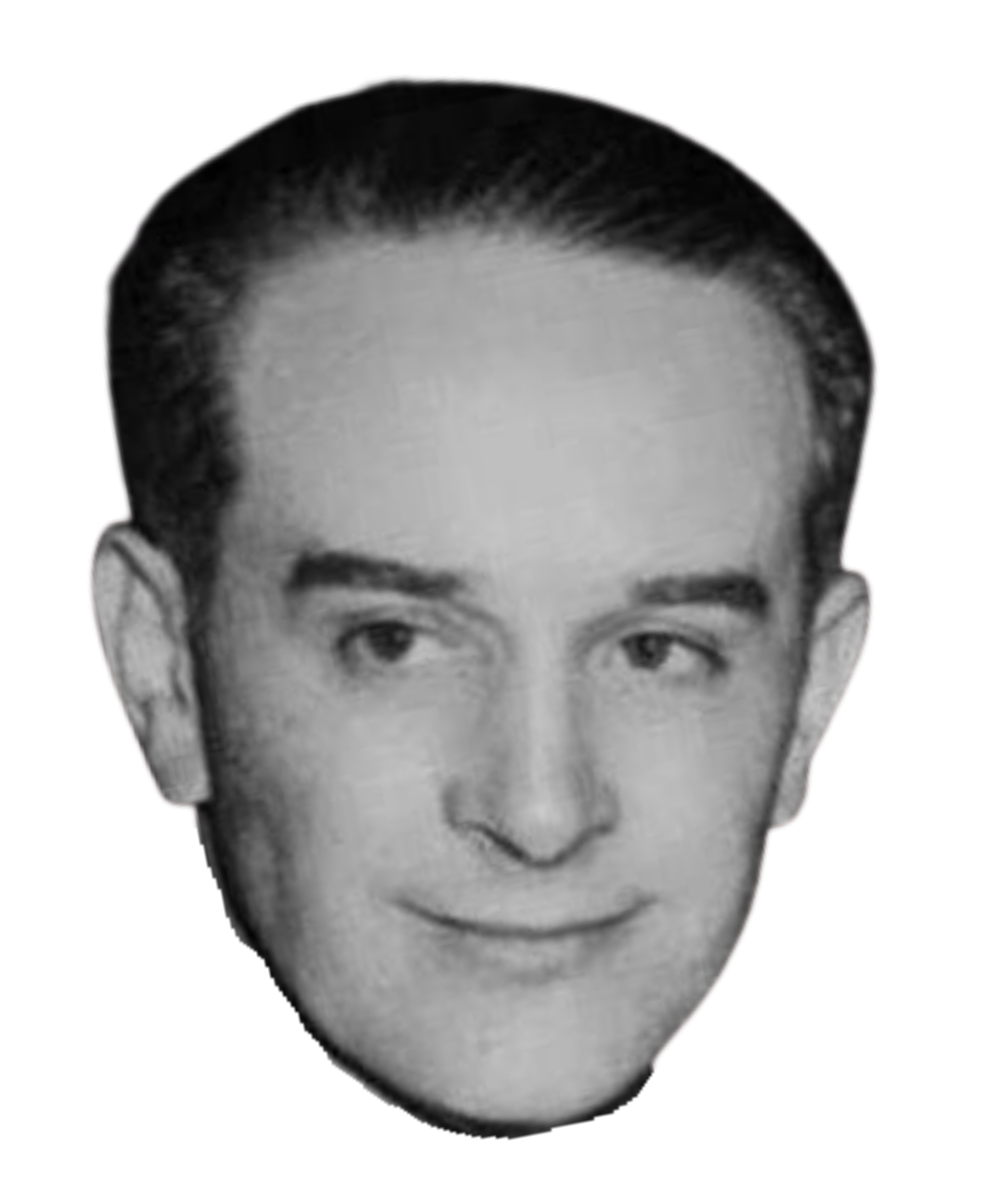
“They are afraid that the example of Guatemala will spread to other Latin American countries. In the name of international communism, they seek to further bloody the country and destroy its economy.”
Jacobo Árbenz Guzmán
Born: September 14, 1913 — Quetzaltenango, Guatemala Died: January 27, 1971 — Mexico City, Mexico (died in exile) Role/Title: 25th President of Guatemala; Minister of National Defense (1944–1950) Country/Region: Guatemala
Who They Were
Juan Jacobo Árbenz Guzmán was a Guatemalan military officer and politician who served as the 25th president of Guatemala. He was the second democratically elected president in his country's history and a major figure in the ten-year Guatemalan Revolution — one of the few periods of representative democracy in Guatemalan history.
Árbenz was the son of a Swiss pharmacist who had immigrated to Guatemala. He was educated at the National Military Academy of Guatemala and joined a group of leftist army officers that overthrew the Guatemalan dictator Jorge Ubico in 1944. During his years of military service, he witnessed firsthand the violent repression of agrarian laborers under the United States-backed dictator Ubico and was personally required to lead squads of soldiers escorting chain gangs of prisoners to perform forced labor. Those early encounters with state brutality against the poor shaped him permanently.
His radicalization occurred partly through intellectual awakening — his wife introduced him to the Communist Manifesto, and Marxist theory offered explanations for Guatemala's history that other frameworks could not. But it was also driven by what he witnessed on the ground: the violent conditions of Guatemalan political life and the centuries-old dispossession of indigenous people. In 1938, he married María Vilanova, who became a significant ideological influence on his thinking.
What They Built and Fought For
Árbenz came to power in 1951 with a clear mandate. He sought to transform Guatemala from a feudalist to a capitalist economy by distributing capital and creating infrastructure to increase production. He pushed for a national highway, a new port, a hydroelectric power plant, and increased cultivation of unused lands.
The centerpiece of his presidency was Decree 900, also known as the Agrarian Reform Law, passed on June 17, 1952.
A mere 2 percent of the population controlled more than 72 percent of Guatemala's arable land. Of all privately held land, less than 12 percent was being cultivated. In a country primarily dedicated to agriculture, this translated into widespread poverty and malnutrition.
Decree 900 was designed to break that stranglehold. The law redistributed unused land greater than 90 hectares (224 acres) to local peasants, compensating landowners with government bonds. Land from at most 1,700 estates was redistributed to approximately 500,000 individuals — one-sixth of the country's population. Indigenous groups, deprived of land since the Spanish conquest, were among the primary beneficiaries. In addition to raising agricultural output, the reform is credited with helping many Guatemalans find dignity and autonomy.
In his own words before the Guatemalan Congress in 1953, Árbenz declared: "The Agrarian Reform Law begins the economic transformation of Guatemala; it is the most precious fruit of the revolution and the fundamental base of the destiny of the nation as a new country." He went on to affirm that the law formed "a part of the heavy debt the ruling class and governors have contracted with the humble people."
By 1954, 570,000 hectares of land had been redistributed, and 100,000 families had received land as well as bank credit and technical aid. Production of corn, coffee, and bananas increased while the law was in effect. A U.S. Embassy report in 1954 — even as the CIA was plotting his removal — acknowledged that the Guatemalan economy was "basically prosperous." ⁶
Beyond land reform, Árbenz legalized the communist PGT party, expanded the right to vote, enabled workers to organize, legitimized political parties, and allowed for genuine public debate — unprecedented freedoms in Guatemala's history.
Who Came for Him — and How
The machinery built to destroy Jacobo Árbenz was assembled at the highest levels of the U.S. government, with corporate interests and Cold War paranoia operating as a single fused motive.
The United Fruit Company (UFCO) as a political weapon
Decree 900 covered the vast holdings of the United Fruit Company, which owned some 600,000 acres — most of it unused. Árbenz shocked UFCO officials when he actually confiscated a large portion of the company's land and offered $1.2 million as compensation. United Fruit and the U.S. State Department countered with a demand for $16 million. When Árbenz refused, Secretary of State John Foster Dulles and CIA Director Allen Dulles convinced President Eisenhower that Árbenz had to go.
The conflict of interest here was not subtle. The Dulles brothers — John Foster and Allen — were former partners of United Fruit's main law firm in Washington. Undersecretary of State Bedell Smith was reportedly seeking an executive job with United Fruit while helping plan the coup against Guatemala. UN Ambassador Henry Cabot Lodge and Assistant Secretary of State for Inter-American Affairs John Moors Cabot were also among the Eisenhower administration officials with documented ties to UFCO.
The company had begun a public relations campaign to discredit the Guatemalan government, spending over half a million dollars to influence lawmakers and members of the U.S. public into believing that the Guatemalan government of Jacobo Árbenz needed to be overthrown.
Operation PBSUCCESS — the coup machinery
As early as 1951 — well before an agrarian reform law could even be written — the CIA was already drawing up a contingency plan codenamed PBFORTUNE to oust Árbenz. In the agency's view, Árbenz's tolerance for known Communists made him at best a "fellow traveler." Under orders from the State Department, PBFORTUNE was supplanted by PBSUCCESS, an active plot to remove him.
Following Eisenhower's approval, the National Security Council authorized PBSUCCESS as a covert action operation, giving the CIA primary responsibility. The stated objective was to "remove covertly, and without bloodshed if possible, the menace of the Communist-controlled government of Guatemala." CIA Director Dulles established a temporary station codenamed LINCOLN to plan and execute the operation. Assassination was developed as an option via a special request on January 5, 1954, for the liquidation of regime personnel, and was further described in a training manual detailing methods of political killing.
The propaganda war was just as calculated as the military one. Beginning in January 1954, the CIA waged a psychological warfare campaign composed of anti-Árbenz and anti-Communist propaganda targeting Árbenz's supporters, the broader Guatemalan population, and the president himself. As the CIA propaganda war persisted, an anti-Árbenz paramilitary group was being trained — with Carlos Castillo Armas at its helm, handpicked by the American government due to his pro-American and anti-Communist leanings.
The CIA established training camps in Nicaragua and Honduras and supplied them with weapons and several bombers. The CIA trained at least 1,725 foreign guerrillas, plus thousands of additional militants as reserves. These preparations were only superficially covert — the CIA intended Árbenz to find out about them, as part of its plan to convince the Guatemalan people that the overthrow of Árbenz was a fait accompli.
The CIA also made covert contact with several church leaders throughout the Guatemalan countryside and persuaded them to incorporate anti-government messages into their sermons.
The collapse
On June 25, 1954, a CIA plane bombed Guatemala City, destroying the government's main oil reserves. Árbenz ordered the army to distribute weapons to local peasants and workers. The army refused, instead demanding that Árbenz either resign or come to terms with Castillo Armas. The fake broadcasts and bombings "put such fear in the small country" that it just collapsed. The Guatemalan army was terrorized into betraying Árbenz, with U.S. commanders convincing Guatemalan military leadership that a massive invasion would follow if Árbenz remained.
Árbenz resigned on June 27, 1954, handing power to Colonel Carlos Enrique Díaz. Described as the definitive deathblow to democracy in Guatemala, the coup was widely criticized internationally and strengthened long-lasting anti-U.S. sentiment in Latin America.
Attempting to justify the coup, the CIA launched Operation PBHistory, which sought evidence of Soviet influence in Guatemala among documents from the Árbenz era — but found none.
The claim that Árbenz had close connections with the Soviet bloc proved to be unsubstantiated. The communist threat was, from the beginning, a manufactured pretext.
The exile and its cost
During and after the coup, more than nine thousand Guatemalan supporters of Árbenz were arrested. Árbenz went into exile through several countries, where his family gradually fell apart, and his daughter died by suicide. He died in Mexico in 1971. His remains were not repatriated to Guatemala until 1995.
What They Left Behind
The immediate aftermath of the coup was brutal and deliberate. Castillo Armas quickly assumed dictatorial powers, banned opposition parties, executed, imprisoned, and tortured political opponents, and reversed the social reforms of the revolution.
A military junta took Árbenz's place but was quickly replaced as the country went through six presidents in just over three years. The instability the coup caused is viewed as a pivotal reason behind Guatemala's chaotic subsequent history.
The overthrow of Árbenz deepened Guatemala's structural inequalities, sparking a civil war that lasted from 1960 to 1996 and resulted in over 200,000 deaths, mostly indigenous civilians. The war, largely fought between government forces and leftist guerrillas, saw brutal counterinsurgency tactics supported by the U.S. The violence culminated in the genocide of the Mayan Ixil population in the early 1980s, with U.S. backing for the Guatemalan military despite knowledge of human rights abuses.
Of those victims identified in the U.N.-sponsored Historical Clarification Commission, 83% were indigenous Maya. 93% of those human rights violations were carried out by government forces.
In 2011, the Guatemalan government finally formally acknowledged what had been done. President Álvaro Colom issued an official apology to the Árbenz family, calling the coup a "crime against Guatemalan society committed by the CIA and Guatemalans with bad intentions." At the National Palace ceremony, Colom said: "It was above all a crime against him, his wife, his family, but also a historic crime for Guatemala. This day changed Guatemala, and we still haven't recovered."
The settlement agreement established multiple forms of reparation: a public ceremony recognizing the state's responsibility; a letter of apology; the naming of a hall in the National Museum of History and a highway after Árbenz; a revision of the national school curriculum; the establishment of a degree program in Human Rights, Pluriculturalism, and Reconciliation of Indigenous Peoples; and a photographic exhibition on Árbenz's legacy.
The Árbenz family has continued to seek a formal apology from the United States. None has been issued.
Why It Still Matters
The indigenous populations of Guatemala today still suffer from some of the worst poverty in the region, lack of land tenure and reform, political exclusion, and cultural exclusion.
The conflict was underpinned by poverty, marginalization, and racism against Mayan indigenous people — all of which still persist today, sometimes with violent consequences. Indigenous community leaders have been kidnapped and tortured for opposing high prices imposed by foreign energy companies, and killed for fighting for their communities' land rights.
U.S.-trained military forces, entrenched social inequality, corruption, and persistent economic dependency have left Guatemala vulnerable to the pressures of transnational capital and global warming.
What Árbenz was killed for — the idea that a nation's land should belong to its people, not to a foreign corporation — remains unresolved. The concentration of arable land in Guatemala has never returned to the redistributed state that Decree 900 briefly achieved. The coup did not just remove a president. It removed the possibility of an economic architecture that served the majority. Everything that followed — the civil war, the genocide, the migration crisis, the narco-state pressures, the poverty — traces a direct line back to June 27, 1954.
Historian Roberto García Ferreira wrote that the revolutionary government represented one of the few periods in which "state authority was used to promote the interests of the nation's masses." The image of Árbenz was significantly shaped by the CIA media campaign that followed the 1954 coup. That campaign worked. For decades, textbooks erased him. His name was synonymous with communist threat rather than democratic reform.
P.O.C.C. names him because the erasure of Árbenz is not just a historical crime — it is an ongoing one. When a government that was democratically elected, economically sovereign, and materially improving the lives of 500,000 indigenous people can be dismantled in weeks by a foreign intelligence agency acting on behalf of a fruit company — and that history is then buried for generations — the lesson being taught is clear: the interests of capital will always be protected over the interests of people of color. That lesson is still being written in Guatemala today.
Key Quotes
On the purpose of governance: "Our program has as its fundamental goal the transformation of Guatemala from a dependent nation with a semi-colonial economy to an economically independent country." — Inaugural Address, March 15, 1951 ¹⁰
On land reform: "The Agrarian Reform Law begins the economic transformation of Guatemala; it is the most precious fruit of the revolution and the fundamental base of the destiny of the nation as a new country." ⁷
On the people the law was written for: "It forms a part of the heavy debt the ruling class and governors have contracted with the humble people, with people of the field with cheap cotton shirts and palm-leaf sombreros who do not have shoes, or medicine, or money, or education, or land." ⁷
His resignation speech, June 27, 1954: "I say farewell to you, my friends, with bitterness and pain, but maintaining high my faith in the democratic destiny of Latin America." — Cited in Stephen Schlesinger and Stephen Kinzer, Bitter Fruit (1982) ¹²
Sources & Citations
Encyclopædia Britannica. "Jacobo Arbenz." Britannica.com. Available at: https://www.britannica.com/biography/Jacobo-Arbenz
Zinn Education Project. "June 27, 1954: Elected Guatemalan Leader Overthrown in CIA-Backed Coup." ZinnEdProject.org. March 23, 2026. Available at: https://www.zinnedproject.org/news/tdih/jacobo-arbenz-guzman-deposed/
U.S. Department of State, Office of the Historian. "Foreign Relations of the United States, 1952–1954, Guatemala — Introduction." history.state.gov. Available at: https://history.state.gov/historicaldocuments/frus1952-54Guat/intro
Cullather, Nicholas. Operation PBSUCCESS: The United States and Guatemala, 1952–1954. History Staff, Center for the Study of Intelligence, CIA, 1994. Declassified. Available via Internet Archive: https://archive.org/details/CIA-Guatemala-Coup-Report
National Archives and Records Administration / National Security Archive. Records Relating to Activities in Guatemala, 1949–1996 (ARC Identifier 6106938). CIA FOIA Electronic Reading Room. Available at: https://text-message.blogs.archives.gov/2012/02/13/the-cia-in-guatemala/
Handy, Jim. "The Most Precious Fruit of the Revolution: The Guatemalan Agrarian Reform, 1952–54." Hispanic American Historical Review, Vol. 68, No. 4. Duke University Press, November 1988. Available at: https://read.dukeupress.edu/hahr/article/68/4/675/
Gleijeses, Piero. Shattered Hope: The Guatemalan Revolution and the United States, 1944–1954. Princeton University Press, 1991.
Schlesinger, Stephen and Kinzer, Stephen. Bitter Fruit: The Story of the American Coup in Guatemala. Harvard University Press, 1982 (Expanded Edition, 2005).
Responsible Statecraft. "How the US-backed coup ended Guatemala's 'Ten Years of Spring'." ResponsibleStatecraft.org. October 29, 2024. Available at: https://responsiblestatecraft.org/guatemala-coup/
Center for Justice and Accountability (CJA). "Guatemala — Historical Context." CJA.org. Available at: https://cja.org/where-we-work/guatemala/
Inter-American Commission on Human Rights (IACHR). "IACHR Satisfied with Friendly Settlement Agreement in Arbenz Case Involving Guatemala." Press Release No. 46/11. OAS.org, 2011. Available at: https://www.oas.org/en/iachr/media_center/PReleases/2011/046.asp
Al Jazeera. "Guatemala leader apologises for 1954 coup." AlJazeera.com. October 21, 2011. Available at: https://www.aljazeera.com/news/2011/10/21/guatemala-leader-apologises-for-1954-coup
CNN. "Apology reignites conversation about ousted Guatemalan leader." CNN.com. October 24, 2011. Available at: https://www.cnn.com/2011/10/22/world/americas/guatemala-arbenz/index.html
The Conversation. "Guatemala's history of genocide hurts Mayan communities to this day." TheConversation.com. Available at: https://theconversation.com/guatemalas-history-of-genocide-hurts-mayan-communities-to-this-day-97796
Beyond Intractability. "Guatemala: Guerrillas, Genocide, and Peace." BeyondIntractability.org. Available at: https://www.beyondintractability.org/library/guatemala-guerrillas-genocide-and-peace
Harvard University, David Rockefeller Center for Latin American Studies (DRCLAS). "Alvarado, Arbenz, Arévalo: The Repair of Guatemala." ReVista. February 2024. Available at: https://revista.drclas.harvard.edu/alvarado-arbenz-arevalo-the-repair-of-guatemala/